Cellphone billing victims come forward
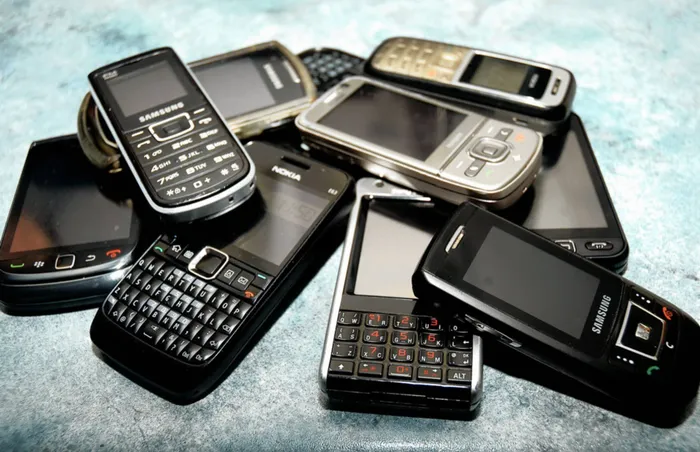
Beware if your cellphone is stolen " it is not the handset so much as the SIM card that is valuable as criminals run up massive international call bills, buy airtime and gamble online. Wendy Knowler offers details and tips on how to protect yourself. Photo: Sarah Makoe Beware if your cellphone is stolen " it is not the handset so much as the SIM card that is valuable as criminals run up massive international call bills, buy airtime and gamble online. Wendy Knowler offers details and tips on how to protect yourself. Photo: Sarah Makoe
Quite a few readers responded to last week’s column - about the almost R1 million cellphone bill fraudsters ran up on a stolen SIM in a matter of days - by sharing their own experiences of the horrendous cost of having their cellphones land up in the wrong hands.
Adelle Morrissey of Joburg emailed me to say: “I got my itemised billing today - my average bill amount is reflected as R600, but I was not contacted to alert me to the fact that within four hours, R11 000 worth of international calls were made from my phone, seconds apart.
“I figured out that my phone was stolen from a restaurant in the south of Joburg while I was enjoying Sunday lunch with my family.”
The most interesting email I received was from a man who had worked for one of the networks for many years, the last eight of them in the forensics division.
He has dealt with many cases of stolen phones being used to run up very high bills, he said, and was pretty scathing about the victims’ attitude.
“Most of them couldn’t be bothered to report the loss or ‘lock’ the SIM cards,” he said.
“It was mostly a case of, ‘when I get to the shops I will do a SIM swop’, which was days, if not weeks later.
“Our systems would pick up high usage and there were many people that I personally phoned who did not even realise their phones had been stolen.
“They say, casually, ‘I thought I’d left it at the office or my friend’s house’, or ‘I think I dropped it in my car and it’s under the seat, must go and have a look sometime’.”
He confirmed that stolen SIM cards were used mostly for international calls, playing gambling games and airtime transfers.
And here’s how those bills grow if not immediately picked up: “Billing is not real time,” he said. “Call data is usually only downloaded from the cell areas to the networks every six hours or so and then to the billing systems.
“By that time the damage has been done. It takes only a couple of hours to run up an international bill of more than R20 000 and if the SIM card is not locked for a couple of days, you can imagine the huge bills that can be run up.”
And here’s some sobering information for those who live in residential complexes with intercom systems that use cellular technology to connect residents with visitors.
“Criminals break open the intercom unit in the dead of night, take the SIM cards and use them in handsets – I have seen a couple of cases where bills have exceeded R100 000 in this way.”
My informant said the criminals were not terribly interested in stolen handsets, as those usually fetched them only a few hundred rands.
“The primary target is always the SIM card. These almost always end up in Hillbrow or Yeoville, where syndicates use them to sell airtime to people on the street who ‘phone home’ – countries including Nigeria, Zimbabwe, Tanzania, Pakistan, India – at cheap rates.”
And what of the handsets?
“The top-of-the-range ones are exported to other countries and the cheapies go into cell repair shops for spare parts,” he said.
His advice is simple – always know where your contract phone is, as well as any “spare” contract SIM cards.
“And get rid of permanent international access on your SIM cards immediately,” he said.
“Also, it’s about time somebody started doing something about the ‘call forwarding’ function, because the criminals use that to run up massive bills” (as in Ashok Sewpersad’s R973 000 case).
As it happens, the day my column appeared Nashua Mobile released a media statement announcing that the service provider was “in the process” of removing the international roaming, calling and forwarding functionality on its customers’ SIM cards “in a pro-active effort to protect them from fraudsters.”
Customers who have not used their international roaming and call forwarding functionality for the past 12 months will have it automatically removed by the Nashua Mobile who will notify them by SMS.
Those who have used those functions in the past six months will receive an SMS requesting them to contact Nashua Mobile.
Those who wish to reactivate functionality must send a formal request to Nashua Mobile by emailing clientservices@ nashuamobile.com or calling 0861 412 412.
* What “You Have Won” means
If a company notifies you that you’ve won a prize, are you wrong to assume that you’ve got lucky in some competition?
According to Homemark’s MD, Dino Hadjipaschalis, you would indeed be drawing the wrong conclusion.
“We never claimed to have held a competition, or that the person had won a competition,” he told Consumer Watch. “We were informing our customers or potential customers that they had ‘a right to a prize’.”
Hadjipaschalis was referring to the direct-marketing bulk SMSes that his company has for years sent to consumers and which read: “Congratulations, you have won a 19-piece knife set from Homemark. Call 011… Prizes excl. P&P. T&C apply.”
No doubt the insistence that Homemark wasn’t in fact staging any competitions had a lot to do with the fact that the Consumer Protection Act prohibits suppliers from telling consumers they’ve won a prize when no competition has been held.
In any event, things have changed.
To “remove any doubt”, Hadjipaschalis said, Homemark has changed its SMS wording to read “Congrats, you have just qualified for a free 19-piece knife set/inflatable bed.”
Hadjipaschalis said the R100 (P&P) was a flat fee which Homemark paid to a courier company.
The purpose of the marketing campaign was to get people to phone in to claim their “gift” and while they were on the line, to attempt to sell them other Homemark products, he said.
But no one was under any obligation to make a purchase, he said and between 60 percent and 65 percent of respondents just took the “gift”.
If they say they’d rather collect their “prize” or “gift”, they are told this isn’t possible. Hadjipaschalis says this is because the company’s call centre division is separate from its stores division, and each runs its own promotional campaigns.
In addition to its direct marketing division, Homemark also sells a range of health and beauty products, homeware and appliances via its 22 retail outlets countrywide.
Sandy Singh of Durban said her Homemark experience was not a satisfying one. She got that “Congrats, you’ve won an inflatable bed” SMS in January, and paid her R99.99 postage and packaging fee.
But the bed never arrived, despite many costly calls.
When I raised her case with Hadjipaschalis last week, he said stocks of the bed had run out, but new stock had recently been received.
He arranged for one to be delivered to Singh, and a bed was handed over last Wednesday.
If it runs out of stock, the company “takes care to inform the customer accordingly, so they do not get the impression we took their money for nothing”, said Hadjipaschalis.
“We apologise for the delay in the case of Ms Singh,” he said.
Singh stressed that she made all those long-distance calls to Homemark over the course of three-and-a-half months – and not once did anyone from the company contact her.
“It cost me a fortune.
“After all those calls I made to them; begging them, literally, and nothing happened, I don’t think the bed would have been delivered if you hadn’t called them,” she said.
Hadjipaschalis said to “put things in perspective”, the company’s call centre agents entered into many thousands of transactions with customers every week.
“We endeavour to address all complaints to the best of our ability,” he said, “and we don’t hesitate to take disciplinary action and dismiss agents where this is warranted.”
* The Consumer Protection Act is a great boon to consumers when it comes to direct marketing. But many consumers apparently don’t know the difference between direct and traditional marketing.
Whereas traditional marketing – an advert in a newspaper, on radio or TV or a shop window display – is aimed at a general group of consumers, direct marketing – an e-mail to your inbox, someone stopping you on the beachfront to talk about a “holiday investment”, an SMS, or a letter in your postbox – is one-on-one. It’s far more invasive, and often there is quite a bit of pressure exerted on the recipient to commit to a purchase or contract.
This is why this kind of marketing is the focus of extra protection in the act.
Perhaps the most significant protection is the cooling-off period – if you buy something or sign a contract as a result of a direct-marketing offer, you have the right to cancel within five business days – in writing, or any other recordable form – and the supplier must refund you within 15 business days.
And you can put up a “no adverts” sign on your postbox, which makes it an offence for a direct marketer to put its leaflets or brochures in, on or around your postbox – or throw them over your fence or wall.
Sadly, I’m already getting reports from city dwellers who’ve put up the signs, but are still having their postboxes jammed with marketing pamphlets.
The act also makes provision for consumers to stop all direct marketing by putting their names on a national Do Not Contact registry, but it hasn’t been set up yet.
In the meantime, you can stop most spam coming your way by registering with the Direct Marketing Association of South Africa’s Do Not Contact register, which its members are compelled to honour.
To register, SMS the letters DMA followed by a space and then your ID number, to 34385.
Contacting the National Consumer Commission
To lodge a complaint about a supplier, call 0860 266 786, fax 0861 515 259 or e-mail ncc@thedti.gov.za - Pretoria News